< BACK TO NEWS
Right Here, Right Now Human Rights Climate Commitments
Daily Camera • April 15, 2023

Panel discusses climate change

inaction
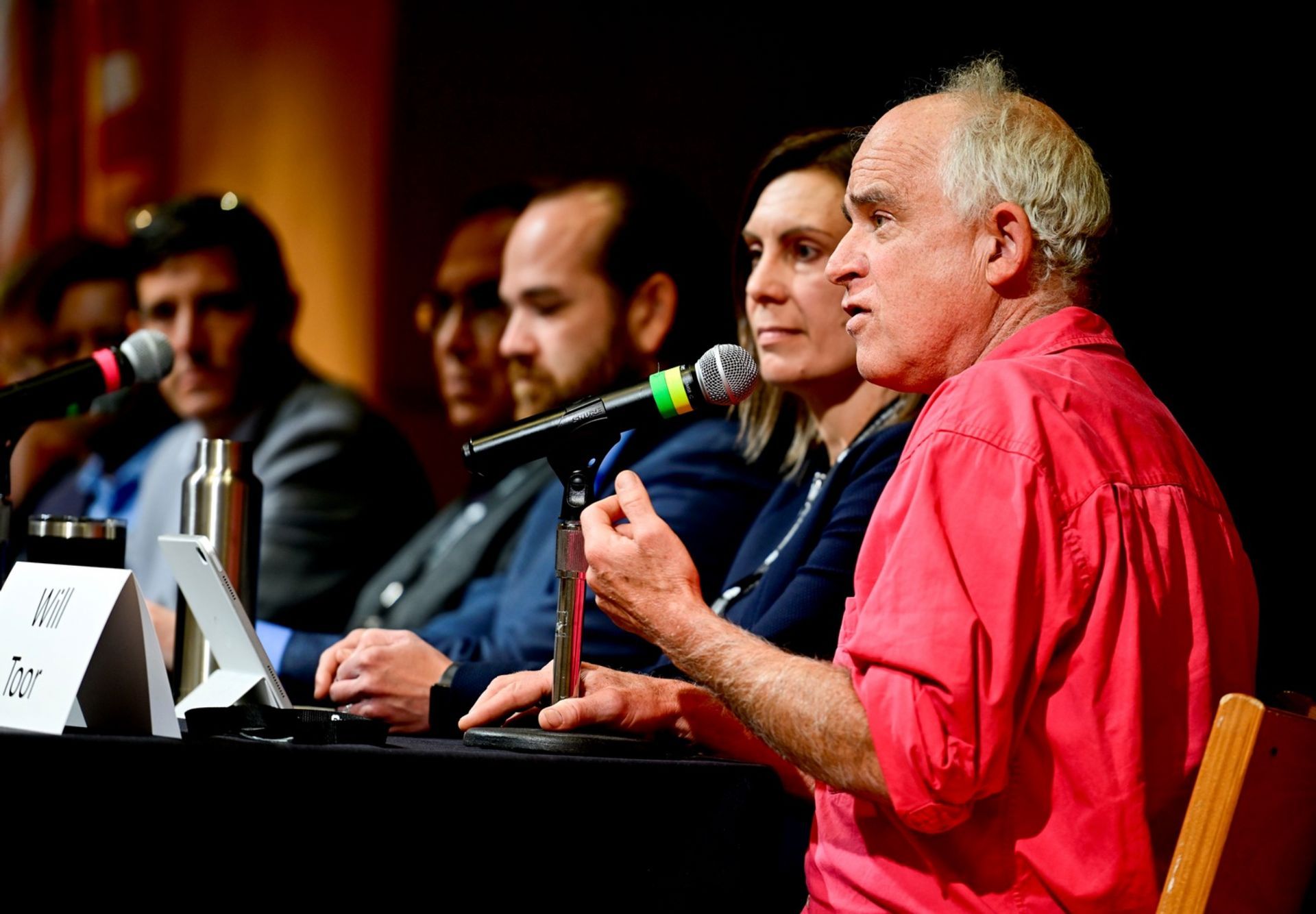
Colorado Energy Office Executive Director Will Toor, right, speaks during the Enacting Climate Solutions Through Human Rights Climate Commitments during the Right Here, Right Now Boulder Impact Forum.


United Nations Human Rights Officer Ben Schachter labeled lack of action on climate change as the “grossest human rights violation” facing humanity today, during a panel Friday, the conclusion of the 75th Conference on World Affairs.


Schachter is a human rights officer and climate change expert at the Office of the United Nations High Commissioner for Human Rights. He was one of six panelists tackling the topic “Enacting Climate Solutions Through Human Rights Climate Commitment” at the CWA, held on the campus of the University of Colorado Boulder.


Schachter said climate change is a human rights issue that harms people, affects their rights and is getting worse without any meaningful action to stop it.


“That is the grossest human rights violation that one can imagine,” Schachter said. “The impacts right now are hunger, water scarcity, displacement, death. These are all human rights violations that are happening on a massive scale, bigger than any other single cause of human rights violation that you can imagine.”


chacter and five other panelists discussed climate change as a human rights issue at the local, state, national and global scale during Friday’s final CWA panel presentation.Panelist James Anaya, who is an author, professor and advocate for human rights and indigenous people, said everyone has the right to a clean, healthy, sustainable environment. That right, he said, is being violated.

“We’re not where we need to be,” Anaya said.


U.S. Rep. Joe Neguse, D-Colo, also participated in the panel. He discussed climate action at the national level in Congress, citing the Inflation Reduction Act as a big step forward while recognizing there’s still much to be done.


“To know that we just passed the most significant climate change legislation in the history of our country less than nine months ago, I think is instructive of what we can accomplish when we’re working together,” Neguse said.


Panelist Will Toor is the executive director of the Colorado Energy Office, a state government position appointed by Gov. Jared Polis. Over the past four years, Toor said there have been approximately 55 pieces of state climate legislation on greenhouse gases, energy efficiency, renewable energy, oil and gas reform, transportation, building and land use efficiency and more.


A few years ago, Toor said he was “pretty pessimistic” about the future of the planet.“But just seeing the progress over the past few years, I’m a lot more optimistic than I’ve ever been,” Toor said.


Panelist Jonathan Koehn discussed issues of climate change at the local level within the Boulder community. Koehn is the manager for the city of Boulder’s Office of Environmental Affairs and has been a leader on Boulder’s Climate Initiatives Team since 2006.


Koehn said Boulder has a history of climate programs and funding not always seen in other cities. While the city has goals to limit emissions by certain amount at certain times, he said the most important goals are immeasurable. “Emissions reduction alone is not sufficient in addressing the climate emergency,” Koehn said.


He said loss of biodiversity, sacredness of land, social injustices and economic inequalities, while not measurable, are challenges local cities, including Boulder, face. Koehn also said Boulder is limited in resources and the action it can take, often relying on state and national legislation.

Panelist Kathryn Wendell is the executive director of the Center for Ethics and Responsibility at CU Boulder’s Leeds School of Business. She discussed the role businesses have to play in the climate crisis. While many businesses have not made climate commitments, she said many others have.


“There are a lot of challenges we still need to address, but I am encouraged about the commitments being made and am excited about the potential for more creative public private partnerships, and I hope the panel can spark action,” Wendell said.


Schachter said it’s important to understand climate change as a human rights issue because of moral and ethical implications.“The things that mobilize people are not numbers, they’re not abstractions. They’re impacts and empathy and compassion.” Schachter said. “So understanding the climate crisis as something that is human-caused perpetuating human suffering that we can stop, I think is very important.”


Neguse said he’s optimistic about the future, and his optimism is born from seeing how local communities, the state and country have responded to climate change in the last couple years.


“I am concerned, as I know every American is, about the climate crisis and its impacts, here in our country and across the world,” Neguse said. “I’m optimistic about our ability to solve it. I’m optimistic about our ability, collectively, to do something about it.”

Share this post:

Additional Recent News
By RHRN News December 10, 2025
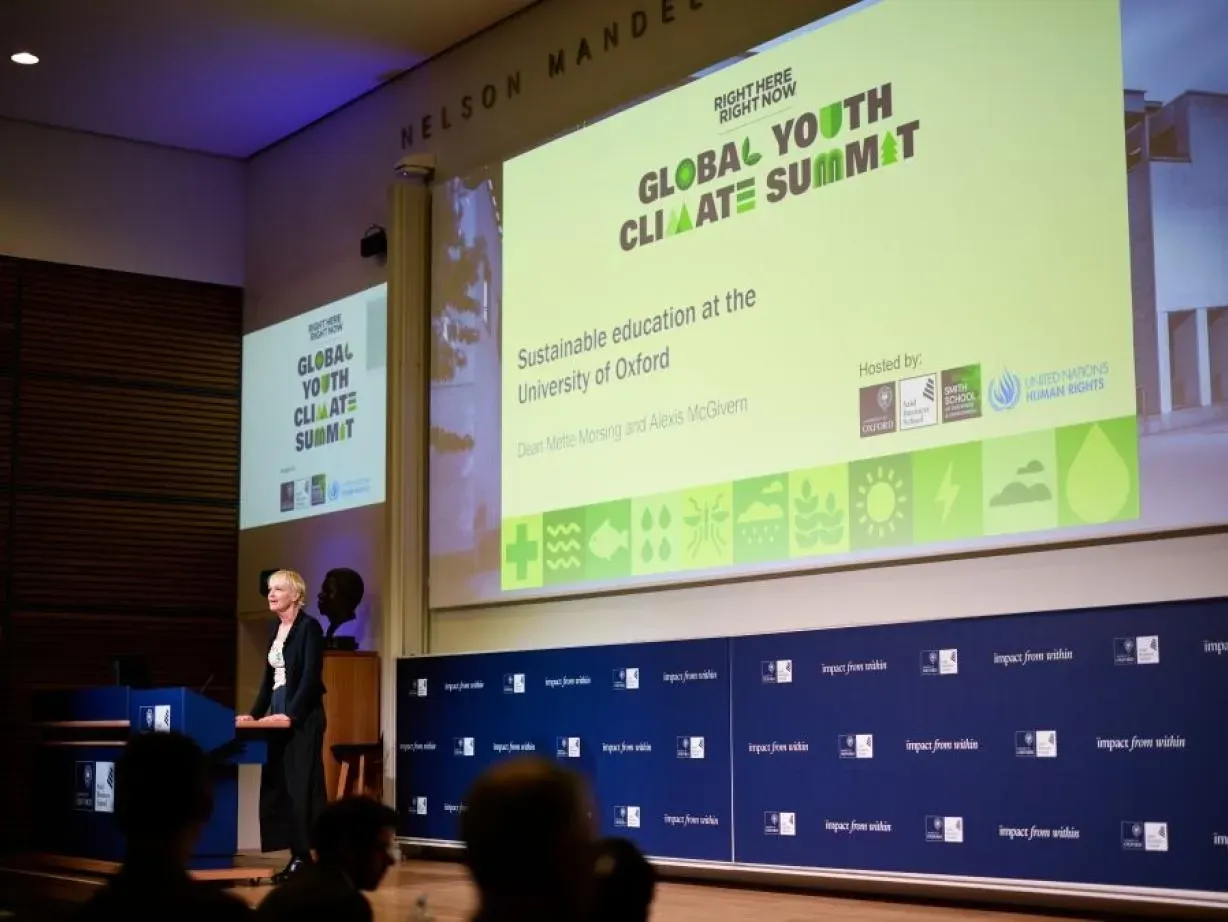
United Nations Human Rights, Saïd Business School, University of Oxford, and the Right Here, Right Now Global Climate Alliance Announce Multi-Year Plan to Host the Global Youth Climate Summit at Oxford on UN World Environment Day  Geneva, Switzerland – 10 December 2025 – On UN Human Rights Day, the Office of the United Nations High Commissioner for Human Rights (UN Human Rights), Saïd Business School, University of Oxford (Oxford Saïd), and the Right Here, Right Now Global Climate Alliance (RHRN) announced a multi-year plan to host the Right Here, Right Now Global Youth Climate Summit annually on UN World Environment Day (5 June). The annual Summit will be jointly hosted by Oxford Saïd and UN Human Rights, with co-hosting support from leading universities worldwide, including the University of Colorado Boulder. The Summit will convene young leaders, scholars, policymakers, educators, and innovators to advance human rights-based climate solutions. “Climate change is already harming the rights of millions of people - and young people refuse to accept a future defined by loss and injustice,” said Astrid van Genderen Stort, Chief of External Engagement and Partnerships at UN Human Rights. “This annual summit seeks to support youth voices in shaping the policies, technologies, and decisions that will define our shared future.” The multi-year initiative establishes Oxford Saïd as the annual home of the RHRN Global Youth Climate Summit, positioning it as a central, youth- and university-driven pillar of the wider RHRN Global Climate Alliance ecosystem. The summit will serve as a touchpoint for collaboration and capacity-building related to human rights-based climate action across campuses and communities around the world. “At Oxford Saïd, we believe education is the catalyst for lasting change,” said Josephine Fawkes, Director of Global Inclusion and Youth Education, Saïd Business School. “The Right Here, Right Now Global Youth Climate Summit convenes young leaders from across the globe, offering a growing platform where they can learn from one another, develop bold solutions, and turn inspiration into action. Their shared commitment and collective power will shape the future of our planet - and we are proud to help elevate their voices.” “Around the world, young people are rising - organizing, innovating, and refusing to accept a future defined by crisis. This summit is a powerful reminder that when institutions genuinely support young people through action, trust and access – they help turn potential into leadership. By aligning with youth voices, Oxford Saïd, UN Human Rights, and the RHRN Global Climate Alliance are creating the conditions for us to lead with purpose and build the future we all deserve,” says Aniba Khan, winner of Oxford Saïd Climate Change Challenge 2023 and an active participant of the RHRN Global Youth Climate Summit 2025. The theme for the 2026 RHRN Global Youth Climate Summit focuses on ensuring climate technologies for mitigation and adaptation are aligned with human rights obligations. It also focusses on developing the tools needed to ensure a just transition to sustainable economies and societies that uphold human rights. The Summit will explore the human rights risks and opportunities of current and emerging technologies like renewable energy systems, resilient infrastructure, data and early-warning tools, and AI in the context of climate action and identify strategies to ensure these risks are mitigated and human rights are upheld. The Summit will be hybrid, hosted physically at Oxford Saïd and livestreamed globally, enabling broad participation while limiting travel and associated environmental impacts. Young people from 12 regions will contribute through dialogues, case studies, and presentations on the intersection of climate change, human rights, and climate technology, highlighting scalable solutions that strengthen resilience and protect communities on the front lines. “This renewed commitment by Saïd Business School builds directly on the success of our inaugural Right Here, Right Now Global Youth Climate Summit last June, which engaged participants from 55 countries,” said David Clark, Founder of the Right Here, Right Now Global Climate Alliance. “Oxford Saïd’s leadership and steadfast support for youth-led climate justice have been invaluable, and I am deeply grateful for their partnership. Together with UN Human Rights, we are working to support youths in advancing transformative change for people and planet.” ABOUT Right Here, Right Now Global Climate Alliance Launched at COP26 with global partner UN Human Rights, the Right Here, Right Now Global Climate Alliance seeks to place human rights at the center of global climate decision-making. The Alliance brings together universities, youth, policymakers, scientists, technologists, cultural leaders, and media organizations to advance human rights-based climate solutions through summits, education, and global engagement programmes. UN Human Rights UN Human Rights represents the world’s commitment to protecting and promoting human rights for all. Climate change poses an urgent threat to rights including food, water, health, housing, culture, and life itself. The Office works to advance climate action that is grounded in human rights and support the central role of those most affected by climate change - including youth, Indigenous peoples, women, and marginalized communities - in global climate responses. Saïd Business School, University of Oxford Saïd Business School at the University of Oxford is a vibrant and innovative business school, embedded within a 900-year-old world leading university. It creates programmes and ideas that have global impact and reach, and educates educate leaders, change makers and innovators across every industry and sector. The School´s groundbreaking research and exceptional teaching transforms individuals, who transform businesses, which transforms the world. Saïd Business School´s focus is to create impact from within. University of Colorado Boulder The University of Colorado Boulder is Colorado’s leading public research university, transforming lives since 1876. Home to five Nobel Laureates and world-renowned atmospheric and geological sciences research, CU Boulder’s vision is to transform lives in service to a just and sustainable world. CU Boulder hosted the inaugural Right Here, Right Now Global Climate Summit with UN Human Rights in 2022 and is proud to support the upcoming RHRN Global Youth Summit through its Conference on World Affairs, Buckley Center for Sustainability Education and Center for African & African American Studies (The CAAAS | The Cause).
By UN Human Rights, Oxford University, Right Here, Right Now Global Climate Alliance, International Universities Climate Alliance July 3, 2025
Joint Statement from United Nations Human Rights, the University of Oxford, the International Universities Climate Alliance, and the Right Here, Right Now Global Climate Alliance
By CU Boulder Today June 10, 2025
Sheila Watt-Cloutier said she believes that educating people about the human impacts of climate change can bring the world together, even in times of political uncertainty and conflict.