< BACK TO NEWS
90 countries represented in first day of global climate summit focused on human rights
Colorado.Edu • December 2, 2022

Nearly 4,000 people from 90 countries convened at CU Boulder, either virtually or in-person Friday, for a day-long, candid exploration of something speakers contend isn’t talked about enough: how climate change impacts people’s lives right now.
VIEW FULL ARTICLE HERE


“A lot of times, we talk about climate change as an issue that will affect future generations, but the reality is, for many communities climate change is already here …and has been for a long time,” said New Zealand-based Indigenous and disability rights activist Kera Sherwood O’Regan during the panel “Understanding Climate Change as a Matter of Human Rights.


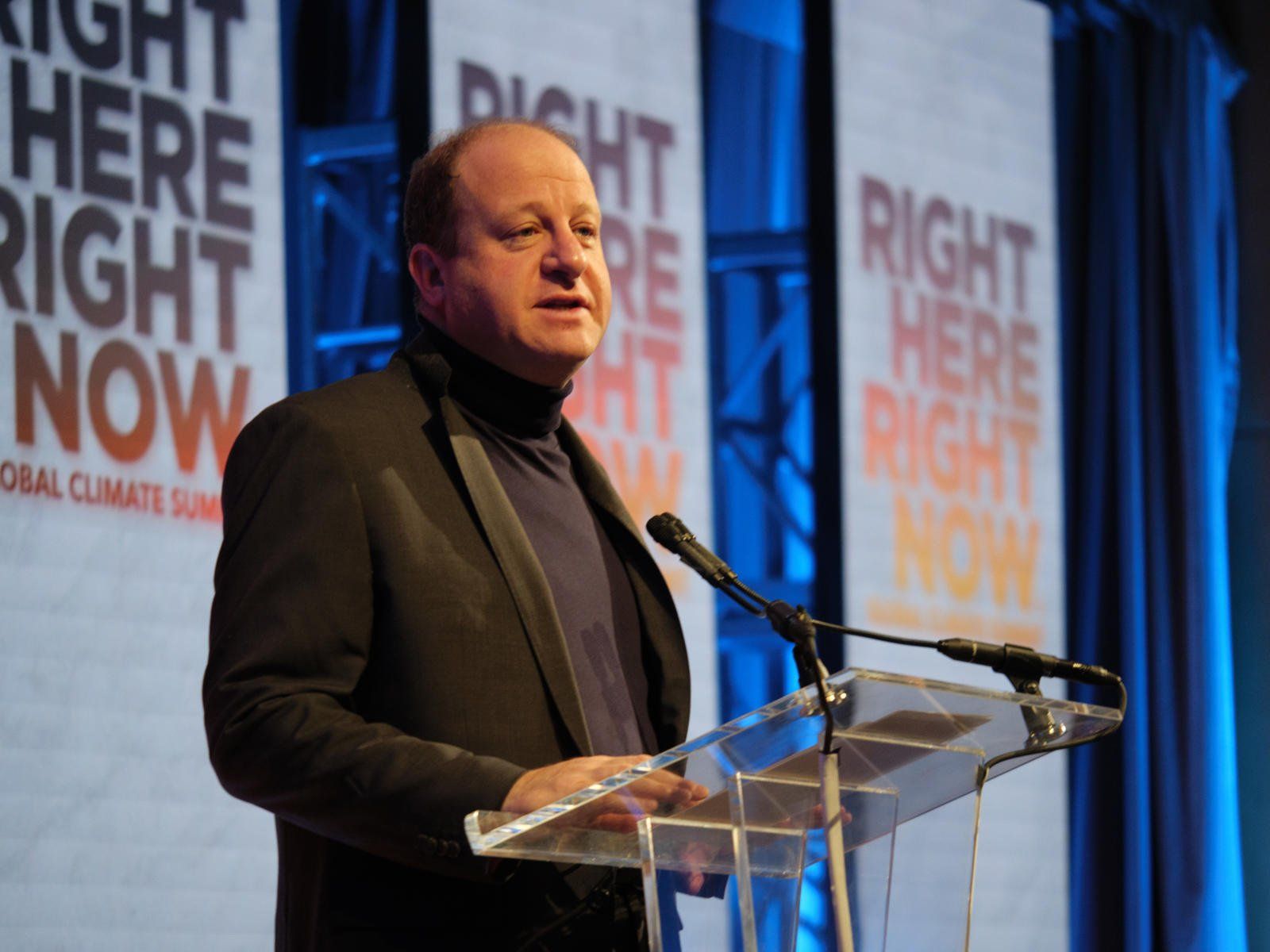
Colorado Gov. Jared Polis kicked off the three-day Right Here, Right Now Global Climate Summit with a stark reminder that no corner of the globe is immune to the impacts of a rapidly warming planet.


Less than one year ago, he noted, just miles from his podium, Boulder County suffered the most destructive fire in the history of the state, a rare wintertime blaze that burned more than 1,000 homes, including those of many CU faculty and staff.


“There’s no denying that climate change is also a humanitarian crisis,” Polis said.


Marshall Islands to Uganda


Throughout the day, speakers from distant corners of the globe shared what that humanitarian crisis has looked like for their communities.

For the young women of South and Central America, crushing drought has forced northward migration, which often comes with danger, including sexual assault, explained Astrid Puentes Riańo, a lawyer and human rights advocate from Colombia who joined the first panel.


She noted that in 2018, a staggering 82% of crops were lost in Honduras, prompting caravans of people, many of them women, to head north.

“It is not the same to be a wealthy man or woman here in Boulder impacted by climate change as it is for a 14-year-old Indigenous girl migrating all the way from Central America,” Riańo said. “If she is lucky, she will get to the U.S. alive.”


During an emotional keynote speech, with images of her great grandfather and other elders displayed behind her, Indigenous rights activist Sheila Watt-Cloutier described how youth suicide rates among the Inuit in the Canadian Arctic are soaring, in part due to the rapid vanishing of ice (long used for hunting, transportation and housing) and a cultural cornerstone for the Inuit people.

“The ice is our life force,” she said.


During an afternoon session titled “The Experiences of those whose Human Rights are Disproportionately Impacted by Climate Change,” youth activist and poet Selina Leem, from the Marshall Islands, spoke of a growing up in a place, just 2 meters above sea level, where global warming could literally mean the submergence of her homeland.


“We are not accepting of the idea of permanently relocating from our country. It is where it is and that is where we deserve it to be,” Leem said.

Beside her on stage, youth activist Hilda Flavia Nakabuye described how droughts and floods, and the resulting lack of harvest, forced her family of farmers to sell portions of their land and pull her out of school when they couldn’t pay the fees.


“Meals reduced from five a day to two to one until we just had to wait for water from the stream and then the stream started drying up. We asked why the gods were punishing us,” Flavia Nakabuye said.


Even well-intentioned “solutions” to climate change can also inflict harm, said panelist Mattias Ãhrén, who comes from an Indigenous reindeer-herding community in northern Sweden, where sprawling wind farms have begun to gobble up vital pastureland. 


“Yes, climate change is terrible, but sometimes the fight against it is even worse,” Ãhrén said.


With candid stories about the devastating impact of climate change came stories of progress.


Panelists noted that at last month’s United Nations Climate Conference, COP27, in Egypt, participating countries reached a historic decision to establish a “loss and damage fund” to support nations most vulnerable to the climate crisis.


This summer, the UN General Assembly passed a resolution recognizing the right to a clean, healthy and sustainable environment as a human right. And a record 300 representatives from Indigenous communities attended COP27, noted Sherwood O’Regan. (Notably, 600 representatives from the fossil fuel industry were also there).


“Loss and damage getting across the line at COP27 is absolutely massive,” Sherwood O’Regan said, stressing that the initiative was brought forth by Indigenous and other front-line communities impacted by climate change. “It is critical that we give credit where it is due. They have not been given space by developed nations, it has happened because people have banged down the doors of those negotiation rooms.”


When asked by NPR journalist and panel moderator Lakshmi Singh to name their No. 1 ask in the battle to save the planet from climate change, the answer from afternoon panelists was universal: representation.


“The power to make decisions has to be shifted from those who might have the means to those who are actually affected,” said Ãhrén.


Share this post:

Additional Recent News
By RHRN News December 10, 2025
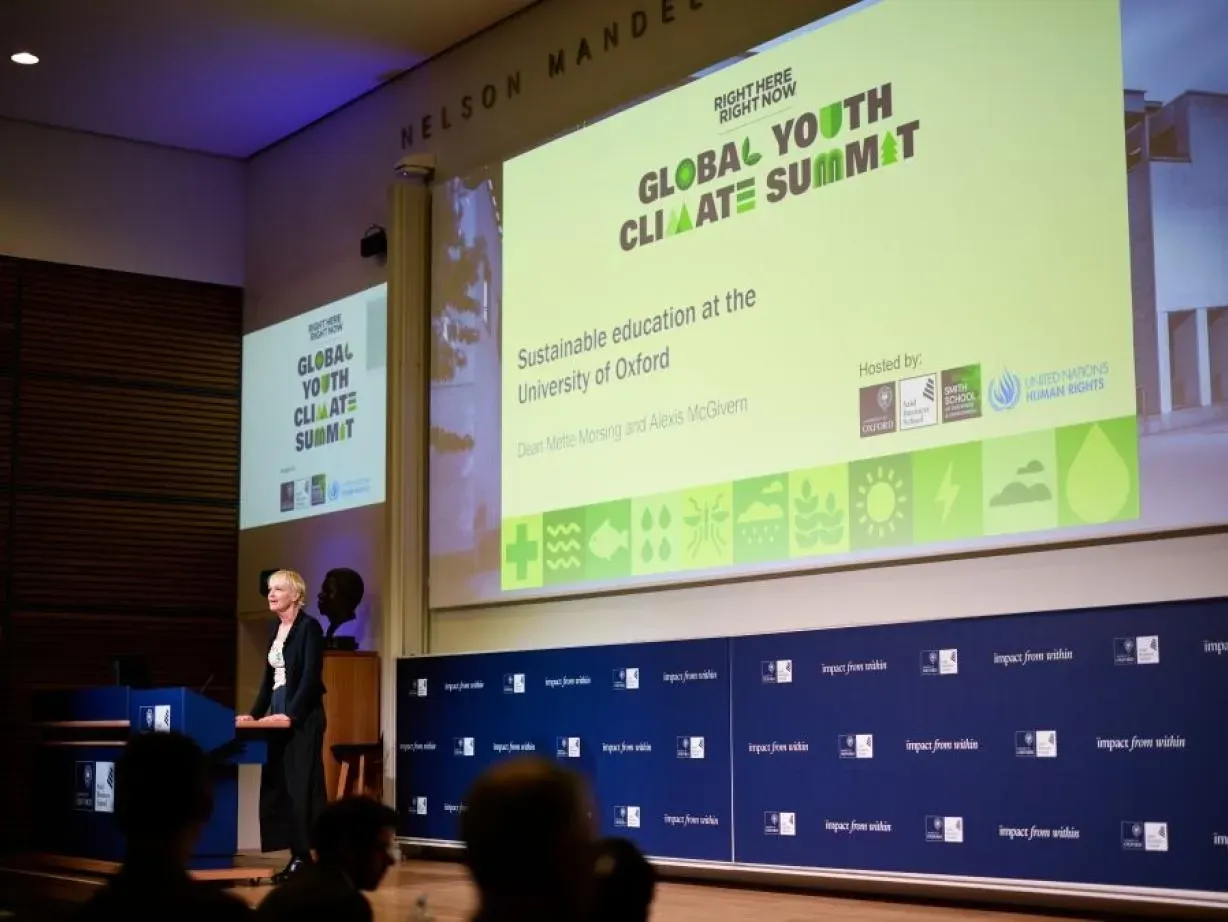
United Nations Human Rights, Saïd Business School, University of Oxford, and the Right Here, Right Now Global Climate Alliance Announce Multi-Year Plan to Host the Global Youth Climate Summit at Oxford on UN World Environment Day  Geneva, Switzerland – 10 December 2025 – On UN Human Rights Day, the Office of the United Nations High Commissioner for Human Rights (UN Human Rights), Saïd Business School, University of Oxford (Oxford Saïd), and the Right Here, Right Now Global Climate Alliance (RHRN) announced a multi-year plan to host the Right Here, Right Now Global Youth Climate Summit annually on UN World Environment Day (5 June). The annual Summit will be jointly hosted by Oxford Saïd and UN Human Rights, with co-hosting support from leading universities worldwide, including the University of Colorado Boulder. The Summit will convene young leaders, scholars, policymakers, educators, and innovators to advance human rights-based climate solutions. “Climate change is already harming the rights of millions of people - and young people refuse to accept a future defined by loss and injustice,” said Astrid van Genderen Stort, Chief of External Engagement and Partnerships at UN Human Rights. “This annual summit seeks to support youth voices in shaping the policies, technologies, and decisions that will define our shared future.” The multi-year initiative establishes Oxford Saïd as the annual home of the RHRN Global Youth Climate Summit, positioning it as a central, youth- and university-driven pillar of the wider RHRN Global Climate Alliance ecosystem. The summit will serve as a touchpoint for collaboration and capacity-building related to human rights-based climate action across campuses and communities around the world. “At Oxford Saïd, we believe education is the catalyst for lasting change,” said Josephine Fawkes, Director of Global Inclusion and Youth Education, Saïd Business School. “The Right Here, Right Now Global Youth Climate Summit convenes young leaders from across the globe, offering a growing platform where they can learn from one another, develop bold solutions, and turn inspiration into action. Their shared commitment and collective power will shape the future of our planet - and we are proud to help elevate their voices.” “Around the world, young people are rising - organizing, innovating, and refusing to accept a future defined by crisis. This summit is a powerful reminder that when institutions genuinely support young people through action, trust and access – they help turn potential into leadership. By aligning with youth voices, Oxford Saïd, UN Human Rights, and the RHRN Global Climate Alliance are creating the conditions for us to lead with purpose and build the future we all deserve,” says Aniba Khan, winner of Oxford Saïd Climate Change Challenge 2023 and an active participant of the RHRN Global Youth Climate Summit 2025. The theme for the 2026 RHRN Global Youth Climate Summit focuses on ensuring climate technologies for mitigation and adaptation are aligned with human rights obligations. It also focusses on developing the tools needed to ensure a just transition to sustainable economies and societies that uphold human rights. The Summit will explore the human rights risks and opportunities of current and emerging technologies like renewable energy systems, resilient infrastructure, data and early-warning tools, and AI in the context of climate action and identify strategies to ensure these risks are mitigated and human rights are upheld. The Summit will be hybrid, hosted physically at Oxford Saïd and livestreamed globally, enabling broad participation while limiting travel and associated environmental impacts. Young people from 12 regions will contribute through dialogues, case studies, and presentations on the intersection of climate change, human rights, and climate technology, highlighting scalable solutions that strengthen resilience and protect communities on the front lines. “This renewed commitment by Saïd Business School builds directly on the success of our inaugural Right Here, Right Now Global Youth Climate Summit last June, which engaged participants from 55 countries,” said David Clark, Founder of the Right Here, Right Now Global Climate Alliance. “Oxford Saïd’s leadership and steadfast support for youth-led climate justice have been invaluable, and I am deeply grateful for their partnership. Together with UN Human Rights, we are working to support youths in advancing transformative change for people and planet.” ABOUT Right Here, Right Now Global Climate Alliance Launched at COP26 with global partner UN Human Rights, the Right Here, Right Now Global Climate Alliance seeks to place human rights at the center of global climate decision-making. The Alliance brings together universities, youth, policymakers, scientists, technologists, cultural leaders, and media organizations to advance human rights-based climate solutions through summits, education, and global engagement programmes. UN Human Rights UN Human Rights represents the world’s commitment to protecting and promoting human rights for all. Climate change poses an urgent threat to rights including food, water, health, housing, culture, and life itself. The Office works to advance climate action that is grounded in human rights and support the central role of those most affected by climate change - including youth, Indigenous peoples, women, and marginalized communities - in global climate responses. Saïd Business School, University of Oxford Saïd Business School at the University of Oxford is a vibrant and innovative business school, embedded within a 900-year-old world leading university. It creates programmes and ideas that have global impact and reach, and educates educate leaders, change makers and innovators across every industry and sector. The School´s groundbreaking research and exceptional teaching transforms individuals, who transform businesses, which transforms the world. Saïd Business School´s focus is to create impact from within. University of Colorado Boulder The University of Colorado Boulder is Colorado’s leading public research university, transforming lives since 1876. Home to five Nobel Laureates and world-renowned atmospheric and geological sciences research, CU Boulder’s vision is to transform lives in service to a just and sustainable world. CU Boulder hosted the inaugural Right Here, Right Now Global Climate Summit with UN Human Rights in 2022 and is proud to support the upcoming RHRN Global Youth Summit through its Conference on World Affairs, Buckley Center for Sustainability Education and Center for African & African American Studies (The CAAAS | The Cause).
By UN Human Rights, Oxford University, Right Here, Right Now Global Climate Alliance, International Universities Climate Alliance July 3, 2025
Joint Statement from United Nations Human Rights, the University of Oxford, the International Universities Climate Alliance, and the Right Here, Right Now Global Climate Alliance
By CU Boulder Today June 10, 2025
Sheila Watt-Cloutier said she believes that educating people about the human impacts of climate change can bring the world together, even in times of political uncertainty and conflict.